

Walking on roof tiles is safe only in limited conditions: dry weather, sound tiles, correct footwear, and a pitch you can stand on without sliding. If you're above 2 metres, HSE rules expect proper fall protection, and most manufacturers won't cover cracked tiles caused by foot traffic. For most homeowners, a professional exterior cleaning service removes the need to go up there at all.
TL;DR:
- Walking on roof tiles is risky unless the weather is dry, the tiles are intact, and proper safety measures are in place for heights above 2 meters.
- Steeper roofs over 35 degrees, moss, cracked tiles, or recent rain significantly increase the likelihood of slips and tile damage.
- Proper preparation includes checking weather forecasts, securing the ladder, using walkboards, and wearing non-slip shoes to reduce breakage and fall risks.
- Avoid stepping on unsupported edges, cracked tiles, or near skylights, and consider professional help if the roof is old, steep, or heavily mossed.
- Hiring a professional exterior cleaning service with soft washing methods is safer and preserves warranty coverage by avoiding unnecessary foot traffic on brittle tiles.
Table of Contents
- Is walking on roof tiles safe? The real risks
- What you need before climbing onto a tile roof
- How to walk on tiles without cracking them
- What to do if you crack or dislodge a tile
- When to call a professional instead
- Why I'd rather see fewer homeowners up on their own roofs
- An alternative: hire a professional exterior cleaner
- Sources
Is walking on roof tiles safe? The real risks
Tiles are brittle by design. Concrete and clay tiles can develop micro-cracks under a boot that look fine from the ground but let water in during the next storm. That's the part most homeowners miss: the damage doesn't always show until weeks later, when a stain appears on a bedroom ceiling.
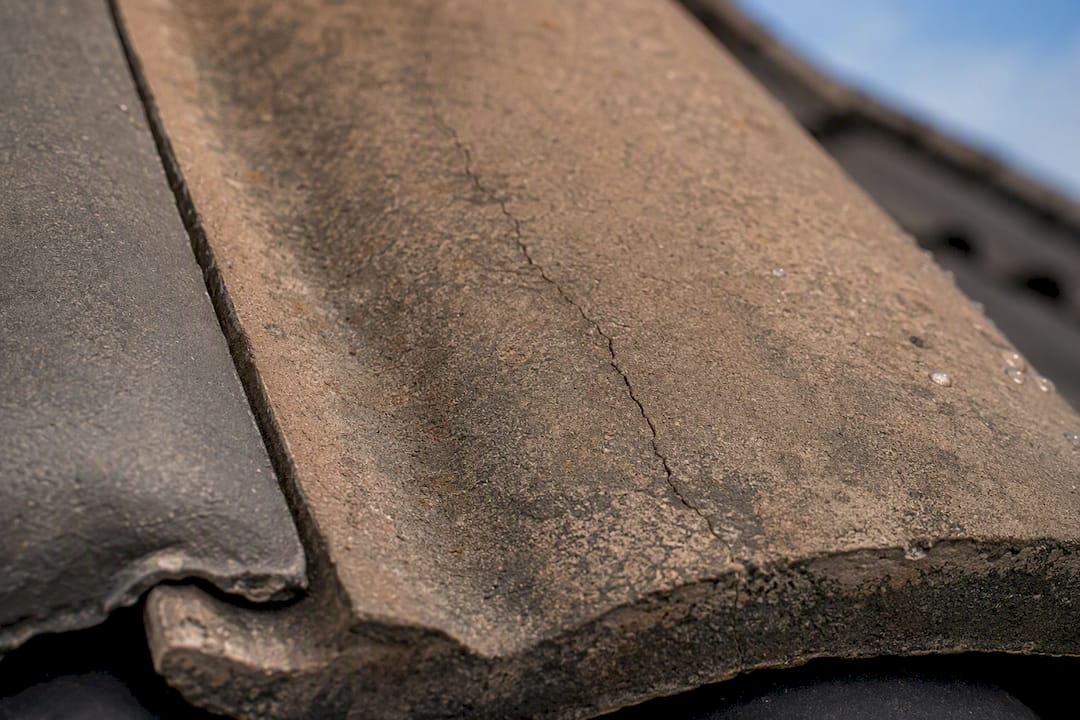
Fall risk climbs sharply with pitch, moisture, and age. A roof pitched at 30 degrees behaves very differently underfoot than one at 45 degrees, and moss turns any surface into a skating rink. Manufacturer guidance from Marley is blunt about this: many suppliers do not warranty tiles broken by foot traffic, regardless of how careful you were.
Before you even fetch a ladder, check for these red flags that mean stay down.
- Pitch steeper than roughly 35 degrees
- Visible moss, algae, or lichen colonies
- Cracked, slipped, or discoloured tiles from ground level
- Any sagging in the roofline
- Wet, frosty, or recently rained-on surfaces
Trade guidance on tile ageing backs this up. RoofersCoffeeShop notes that older tiles lose flexibility and crack more easily, and wet tiles are both slippery and more brittle than dry ones.
What you need before climbing onto a tile roof
Get the setup right and you remove most of the risk before your foot touches a single tile. Work through this in order:
- Check the forecast. Only attempt access on a dry day with no rain in the previous 24 hours.
- Position your ladder at the correct angle (roughly 75 degrees, or one metre out for every four metres up) and secure it with proper ladder hooks or stabilisers.
- Switch to a roof ladder for anything beyond the eaves. It hooks over the ridge and takes your weight off the tiles entirely.
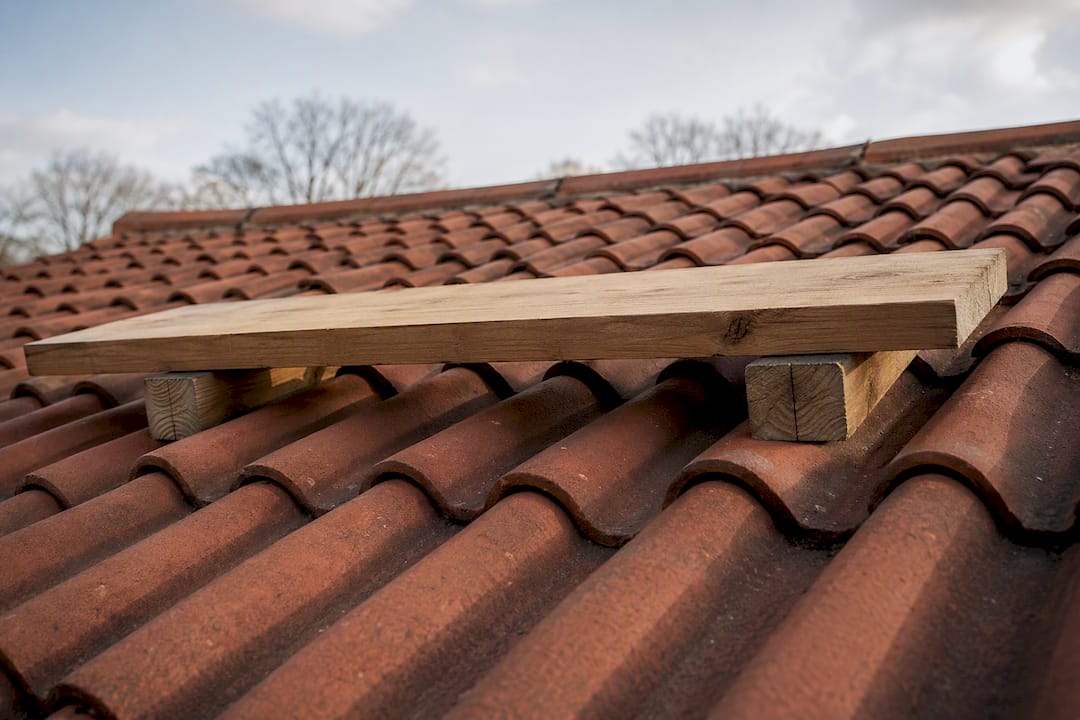
- Lay crawling boards, walkboards, or wide scaffold planks across the roof to spread load over multiple rafters rather than single tiles.
- Wear soft, grippy rubber-soled shoes. Trainers with worn tread are a genuine hazard here.
- Fit a harness anchored to a fixed point on anything steeper than a gentle domestic pitch.
- Clear moss or loose debris from your intended path first, or accept that the job needs a professional.
Eagle Roofing's technical guidance recommends roof ladders and walkboards specifically because they cut breakage rates compared with stepping directly on tiles.
Pro Tip: Lay a plank flat before you commit any weight to a new section of roof. If it flexes or rocks, that's your rafter spacing telling you something. Move the plank until it sits solidly across at least two supports.
How to walk on tiles without cracking them
Foot placement matters more than almost anything else you'll do up there. Get this wrong and even a light frame can snap a tile that would otherwise last decades.
- Step on the bottom third of each tile, where it overlaps the one beneath. This is the supported section, backed by the tile below it, and it takes weight far better than the middle or top.
- On barrel or curved profiles, place your foot across two adjacent peaks rather than in the trough between them.
- Keep your feet parallel to the ridge line, not pointing up or down the slope. Shuffle sideways rather than striding forward.
- Maintain three points of contact wherever the pitch allows it, using a hand on the ridge or a fixed structure.
- Distribute your weight slowly onto each new step before lifting the trailing foot.
A few areas are off limits regardless of technique:
- Hips and valleys, where tiles are cut and unsupported at the edges
- Any tile you can see is already cracked or slipped
- The very edge of the roof, near gutters, where there's no tile below to share load
- Skylights or roof lights, which can't bear foot weight at all
TRIA's technical guidance recommends favouring mortar-bedded ridge tiles as a walking path where one exists, since these are fixed solidly rather than resting loosely. Where you have a choice, route your path along the ridge or ties, and lay planks across the rafter spacings for anything beyond a quick step across. The plank does the work of a dozen careful footsteps, and it's far cheaper than a replacement tile and the scaffolding to fit it.
What to do if you crack or dislodge a tile
Stop where you are and check what's happened before you take another step. A hairline crack might look cosmetic, but it's an open invitation for water once autumn rain sets in.
- Look for slipped tiles, visible cracks, or gaps where one has shifted out of alignment.
- Check the loft space below for damp patches, daylight gaps, or a musty smell after your walkabout.
- Swap a cracked tile for a spare if you keep one, but avoid walking back over that same spot until it's properly seated.
- Photograph any damage immediately, both for your own repair notes and for warranty or insurance conversations.
- Leave anything beyond a single straightforward swap to a roofer. Ridge tiles, valleys, and anything involving flashing are not DIY repairs.
Manufacturers are consistent on this point: negligent walking that voids a warranty is a real financial risk, not a technicality. TRIA's guidance flags that unauthorised repairs or careless access can affect both manufacturer cover and insurance claims down the line.
When to call a professional instead
Some roofs simply aren't a DIY job, and knowing where that line sits saves you a broken tile, a hospital visit, or both.
- Any work involving sustained access above 2 metres, where HSE requires a temporary platform or edge protection rather than a ladder and a prayer.
- Pitches steeper than a gentle domestic slope, where a slip has nowhere safe to stop.
- Roofs with visible moss, multiple cracked tiles, or any sign of structural sag.
- Tiles older than 20 to 25 years, which have generally lost the flexibility of newer material.
Industry bodies including the Tile Roofing Industry Alliance consistently point homeowners toward professionals for exactly these conditions: extended access, age, pitch, or moss. Professional crews bring fall arrest equipment and proper platforms that meet the Rooftile Association's specifications, including guardrails at a minimum 910mm and toe-boards at least 150mm. Methods like soft washing and rotary cleaning also mean far less foot traffic on the tiles in the first place.
Why I'd rather see fewer homeowners up on their own roofs
Most rooftop accidents I hear about didn't happen because someone was reckless. They happened because a straightforward job, like clearing moss off a valley, turned into an hour of shuffling across unfamiliar territory with the wrong shoes on. That's the gap nobody talks about: it's not the climbing that catches people out, it's the second or third trip up, once the initial caution has worn off.
Some professional cleaning services approach roofs the way manufacturers recommend: soft washing and rotary tools from secured platforms, with minimal direct foot contact on the tiles themselves. Homeowners get a clear understanding of what a job needs before anyone sets foot on a ladder. shapes how this approach gets applied job to job. The tiles that crack under careless walking rarely crack under a properly rigged soft wash.
— Mohammed
An alternative: hire a professional exterior cleaner
Professional exterior cleaning services offer an alternative to climbing your own roof: moss and algae removal without a single footprint on a tile. Soft washing and rotary cleaning methods do the work from secured platforms, which sidesteps both the fall risk and the warranty headache of foot traffic on brittle tiles.

Some services provide fixed pricing after photos or a short call, so there is no surprise invoice once the work begins. Direct contact with the service provider rather than a call centre, and before-and-after photos, help show exactly what was done. If your roof has moss, staining, or debris you'd otherwise be tempted to clear yourself, get a fixed quote from Axora Cleaning before you touch a ladder.