
Moss on a roof is a genuine problem, not just an eyesore: it holds water against tiles and shingles and can shorten the roof's life if left alone. Check the size and thickness of the growth from the ground first, and never reach for a pressure washer. Call in a professional if the moss is widespread or your roof is older than 15 to 20 years.
TL;DR:
- Moss growth on older roofs over 15 to 20 years often indicates underlying damage that requires professional assessment, especially if widespread.
- Removing moss yourself from a fragile, steep, or heavily mossed roof is risky; it is better to hire professionals using low-pressure, biocide-based cleaning methods.
- Regular maintenance like trimming overhanging branches, cleaning gutters, and installing metal strips can significantly reduce moss regrowth over time.
- The best times to treat moss are during spring and summer, with dry weather ensuring chemical treatments work effectively and roofs dry properly afterward.
- Accurate, fixed-price quotes based on photos or brief calls are available from some services, reducing guesswork and ensuring proper protection of older or delicate roofs.
Table of Contents
- How to tell if your roof moss is minor or serious
- What moss actually does to your roof over time
- How to remove moss from a roof yourself, safely
- When should you call a professional roof cleaner?
- How to stop moss growing back on your roof
- When is the best time of year to treat roof moss?
- What I'd actually prioritise as a homeowner
- Get a fixed-price roof clean without the guesswork
- Sources
How to tell if your roof moss is minor or serious
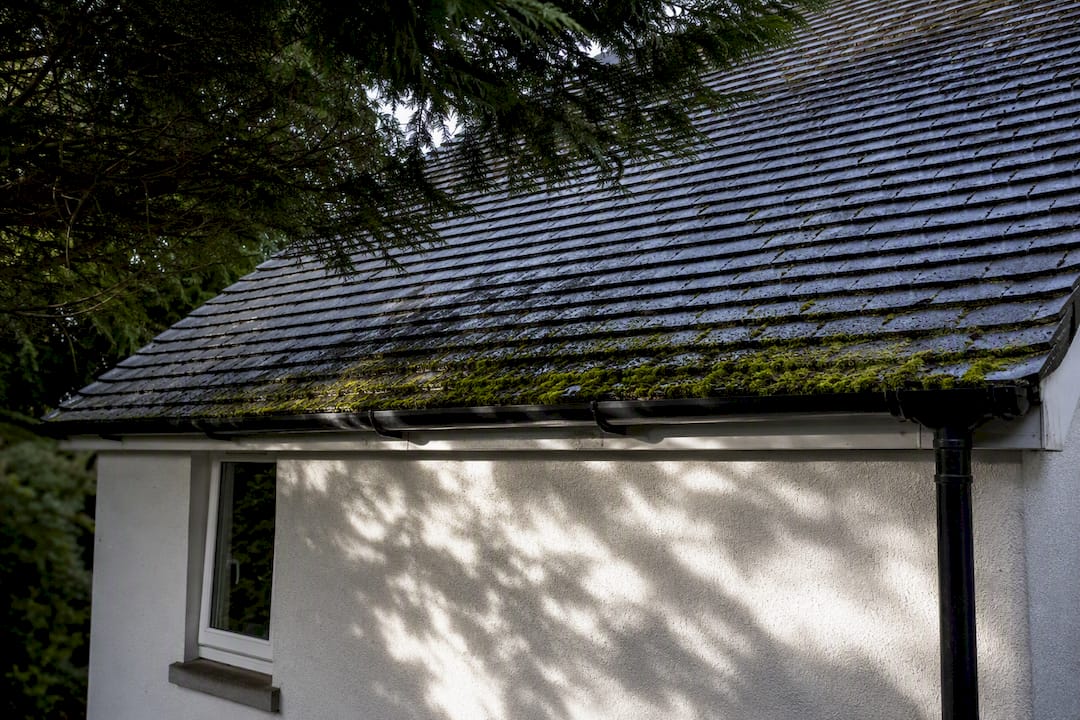
Grab a pair of binoculars before you grab a ladder. Most of what you need to know can be worked out from the ground: patch size, colour, and where the moss has taken hold.
Look for these signs during a walk-round inspection:
- Patch size and spread: a few small green cushions near the north-facing slope is minor; continuous mats covering whole courses of tiles is serious.
- Thickness: thin, flat moss is easier to deal with than thick, spongy growth that's clearly been building for a couple of seasons.
- Lifted or displaced tiles: any tile edge that looks raised or out of line suggests moss has already worked its way underneath.
- Blocked valleys and gutters: moss debris washing into these areas is often the first visible sign of a bigger buildup higher up.
- Access and pitch: if the roof is steep, wet, or the tiles look slippery, don't climb up for a closer look. Photograph what you can see with a zoom lens instead.
If you're planning to get quotes, decent photos from the ground, front, back, and both gable ends, give a professional enough to assess the job without setting foot on a ladder.
What moss actually does to your roof over time
Moss behaves like a sponge sitting directly on your roofing material. It holds moisture against the surface, which keeps tiles or shingles damp far longer than they'd otherwise be after rain. That constant dampness weakens the material from beneath, and as moss cushions grow, they can physically lift tile edges, creating gaps where wind-driven rain gets in.
The real cost isn't the moss itself, it's what it lets through. Once water and debris find a way under a lifted tile, you're looking at rot in the roofing felt or timber below, and eventually a leak that shows up as a stain on a bedroom ceiling months later. A roof that's losing its watertight seal also loses some of its insulating value, meaning higher heating bills long before anyone notices a drip.
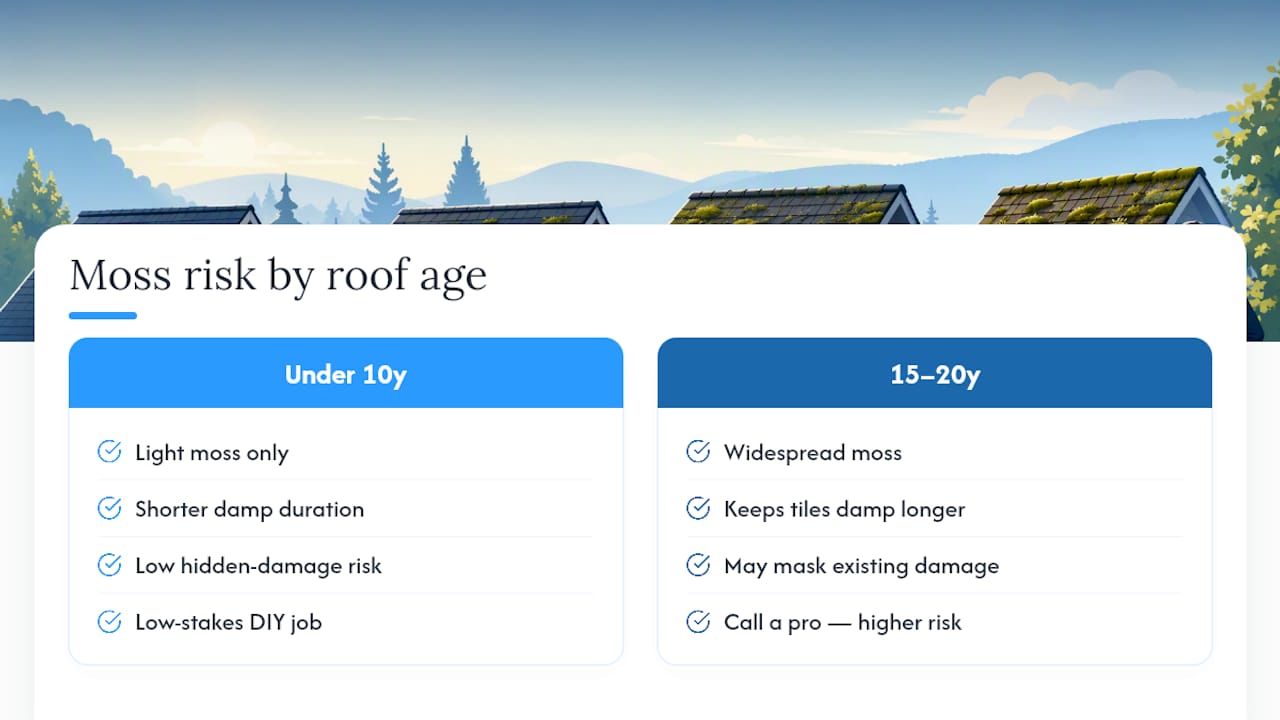
This is why age matters as much as appearance. A roof under ten years old with a light dusting of moss is a low-stakes DIY job. A roof pushing past 15 to 20 years with widespread moss growth is a different calculation entirely, because the moss may be masking damage that's already happened underneath it.
How to remove moss from a roof yourself, safely
Light, patchy moss on a roof you can safely access is a reasonable DIY job. Anything beyond that, hand it to a professional rather than risk a fall or make the damage worse.
Get the basics right before you start:
- Check the ladder and your footing. Use a stabiliser bar, set the ladder on firm level ground, and never work alone on a roof job.
- Wear grippy footwear and gloves. Wet tiles and moss residue are slippery even in dry weather.
- Protect plants and lawn below. Lay tarps or sheeting to catch debris and runoff from any treatment.
- Work from the ridge downward. Brush moss off gently with a soft-bristled brush, following the direction the tiles overlap, not against it.
- Collect debris as you go. Bag it up rather than letting it wash into gutters and downpipes.
- Apply a chemical treatment to kill remaining spores. A diluted bleach solution, roughly laundry strength mixed with water, is the standard recommendation for asphalt shingles. Some homeowners use oxygen bleach or proprietary biocides instead; whichever you choose, apply at low pressure with a garden sprayer and let it sit before rinsing gently.
- Never use a pressure washer. High-pressure jets strip granules from shingles and can force water under tiles, causing exactly the damage you're trying to prevent.
- Check gutters and valleys once the job's done. Clear out anything that washed down during the clean.
Pro Tip: Treat on a dry, overcast day rather than in direct sun. Sun makes chemical treatments evaporate before they've had time to work, and it makes the roof surface hotter and more slippery underfoot.
Keep an eye on the treated area over the following weeks. Regrowth within a season usually means the underlying shade and moisture problem hasn't been addressed, not that the treatment failed.
When should you call a professional roof cleaner?
Soft washing is the method most roofing professionals use, and for good reason. It combines a low-pressure spray with a biocide left to dwell on the surface, killing moss at the root without the abrasive force that strips granules or dislodges tiles. Rotary cleaning, a soft rotating pad rather than a jet, does a similar job on harder surfaces where more agitation helps.
A professional visit isn't just about getting the moss off. It's a chance for someone experienced to spot problems you can't see from the ground:
- Cracked or slipped tiles hidden beneath the moss cushions.
- Flashing around chimneys and vents that's come loose or lost its seal.
- Early signs of rot in fascias or roofing felt where water has been sitting.
As a rule of thumb, bring in a professional when the roof is steep, large, older than 15 to 20 years, or when the moss covers more than a small patch. Homebuilding puts it plainly: professionals can clean safely and check for underlying issues at the same time, which is difficult to replicate from a ladder on a Saturday afternoon.
Some professional roof cleaners offer quotes from photos or a quick call rather than a lengthy site visit, provide fixed pricing before work starts, and supply before-and-after photos so you can see the changes.
How to stop moss growing back on your roof
Removing moss without changing the conditions that let it grow is a temporary fix. Moss needs shade and damp to establish itself, so the real prevention work happens around the roof, not on it.
- Trim overhanging branches. More sunlight and airflow across the roof surface makes it far less hospitable to moss spores.
- Clear gutters, valleys and eaves regularly. Trapped leaves and debris hold moisture exactly where moss likes to start.
- Consider metal strips near the ridge. Zinc or copper strips release trace amounts of metal ions when it rains, which inhibit moss growth on the courses below. Oregon State University's extension service notes these metals can be corrosive to each other or harmful to aquatic life if runoff isn't managed, so fit them correctly and avoid mixing metal types on the same roof.
- Book an annual inspection. A once-a-year sweep in late summer, checking gutters, valleys and any shaded north-facing slopes, catches new growth while it's still a five-minute job.
Pro Tip: If one side of your roof always moss over faster than the rest, that's your shade and drainage problem in miniature. Fix that specific area (a branch, a blocked gutter section) rather than treating the whole roof the same way.
Environmental change is the only genuine long-term solution here. Chemical treatments and strips slow moss down, but shade and standing moisture are what let it come back.
When is the best time of year to treat roof moss?
Spring and summer are the best windows for treating moss, simply because drier weather gives treatments time to work and the roof time to dry properly afterwards. Moss is most active during the cold, wet months, which is exactly when you don't want to be up a ladder anyway.
- Autumn and winter: moss grows fastest, but wet conditions make DIY work risky and treatments less effective.
- Spring: a good window to clean off winter growth before it thickens further.
- Summer: ideal for chemical treatments and preventive work like fitting metal strips, since dry spells let everything cure properly.
Plan any reapplication around the forecast rather than the calendar. A treatment washed away by rain within hours of application has done almost nothing.
What I'd actually prioritise as a homeowner
Skip straight past the anxiety of seeing green patches on your roof and go straight to inspection. Most people either ignore moss for years or attack it with a pressure washer the first weekend they notice it, and both reactions cause more damage than the moss itself would have.
Fix the environment first, shade, drainage, debris, because no amount of scrubbing solves a problem that the site itself keeps recreating. And if you're getting quotes, a photo-based process gives you a fixed price without a stranger walking your roof unnecessarily. That's the sequence that actually protects the roof: assess, address the cause, then treat.
— Mohammed
Get a fixed-price roof clean without the guesswork
Some roof cleaning services offer an alternative to DIY or open-ended quotes by providing exact pricing before work starts through photos or a quick call. Roofs may be cleaned using soft-wash and rotary methods rather than high-pressure jets, which protects tiles and shingles while removing moss.

Dealing directly with the service provider rather than a call centre, and receiving before-and-after photos, helps customers see exactly what was done. This can be particularly important on older roofs, where a professional can spot issues missed by DIY efforts.
If your roof is showing moss and you'd rather not spend a Saturday on a ladder, get a fixed-price quote from Axora Cleaning based on a few photos.